
In many construction or renovation projects for sports facilities, stand seats are defined with just two pieces of information: quantity and color.
The problem is that this description is insufficient to compare solutions with technical criteria.
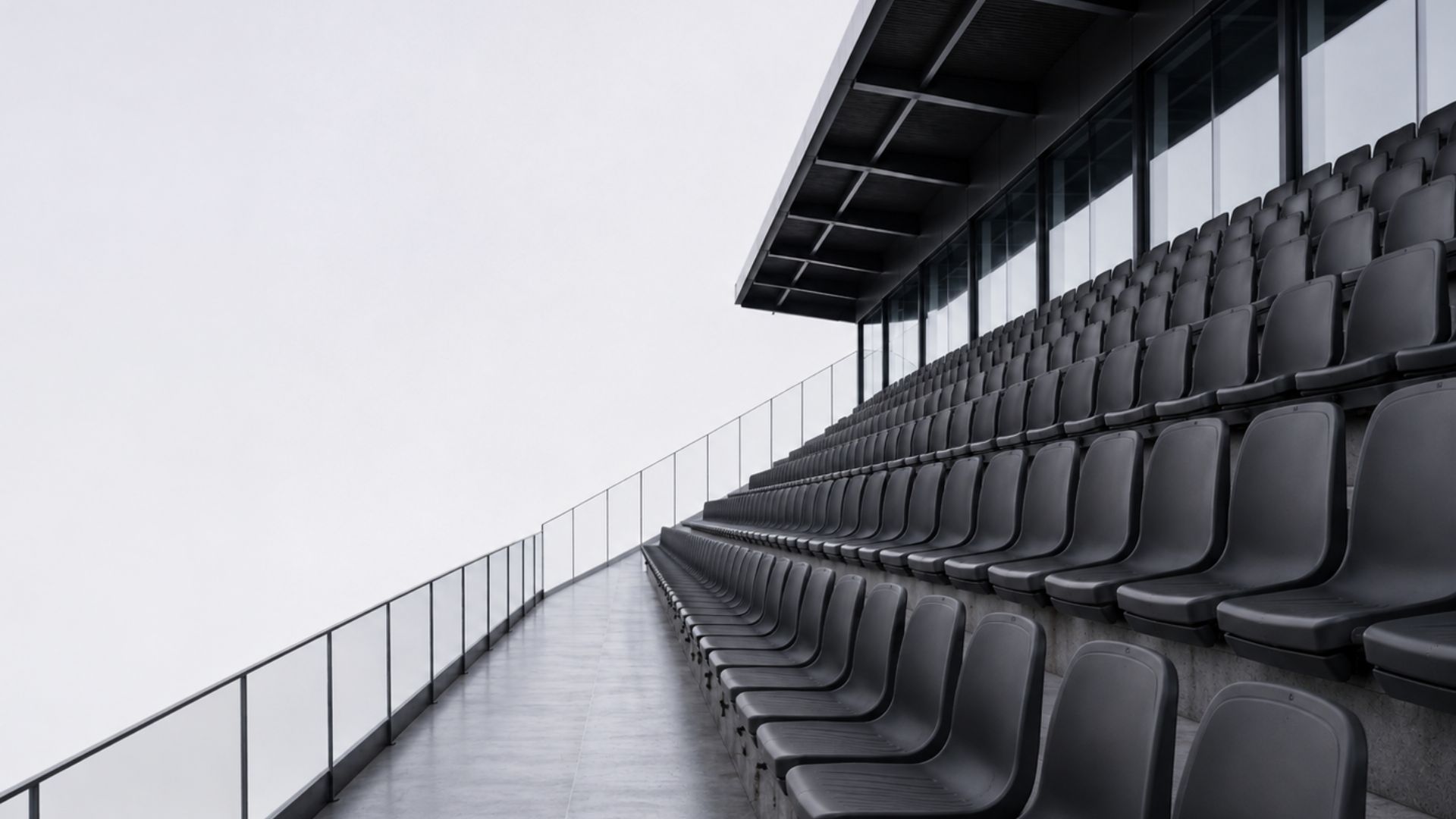
Two models may appear similar in a photograph and offer very different results in resistance, maintenance, safety, durability or installation cost. For this reason, a well-written document must go beyond aesthetics and establish minimum requirements that allow offers to be evaluated on equal terms.
At FanBase we design, manufacture and install sports seats from our facilities in Castalla, controlling the different phases of the project: design, mold development, prototyping, production and installation solutions.
Next, we analyze six aspects that should be clearly defined in any seating document for stadiums, pavilions, sports centers or sports venues.
1. Reference regulations and accredited tests
The document must expressly indicate what standards the seat must comply with and what documentation the manufacturer must present.
Among the most relevant technical references for seats in sports facilities are:
- UNE-EN 12727, related to the resistance, durability and safety of seats for public use.
- UNE-EN 13200-4, specific for seats intended for spectator facilities.
A commercial declaration of compliance should not be sufficient.
It is advisable to request test reports issued by accredited laboratories or technological institutes, clearly identifying the model tested and the result obtained.
The FanBase SPARK series, for example, has been tested and certified by the Valencia Biomechanics Institute in accordance with UNE-EN 12727:2017 and UNE-EN 13200-4:2008.
Recommended wording for the document
The manufacturer must provide technical documentation that certifies compliance with UNE-EN standards. 12727 and UNE-EN 13200-4 through tests carried out on the model offered by an accredited entity.
2. Resistance to solar radiation and aging in stand seats
In an outdoor stand, the seat is exposed for years to solar radiation, changes in temperature, humidity and adverse weather conditions.
Therefore, it is not enough to indicate that the product is “resistant to UV rays.”
The specification should require verifiable information on:
- Type of material used.
- Stabilization against ultraviolet radiation.
- Light resistance tests.
- Behavior against accelerated aging.
- Stability of color and mechanical properties.
FanBase seats are manufactured by injection of stabilized copolymer polypropylene and may incorporate anti-UV additives to improve their resistance to outdoor exposure.
Recommended wording for the document
The material must be stabilized against ultraviolet radiation. The bidder will provide technical documentation or aging tests that prove the resistance of the seat and the color stability in outdoor installations.
3. Behavior against fire
The requirement for reaction to fire must be especially analyzed in:
- Covered pavilions.
- Auditoriums.
- Interior stands.
- Structured facilities metal.
- Enclosures with specific evacuation conditions.
- Spaces with a high concentration of spectators.
Not all installations require the same classification, so the designer must define it according to the use, location and construction characteristics of the premises.
FanBase has solutions with fire resistance and options such as M2 classification, depending on the model and project requirements.
Recommended wording for the document
The seats must comply with the reaction to fire classification required for the venue. The manufacturer will provide the corresponding test certificate, indicating the material, the model and the classification obtained.
4. Anchoring system adapted to the support
One of the most common errors is defining the seat without specifying how it will be installed.
However, the fixing system changes depending on the surface:
- Concrete step.
- Rise.
- Structure metal.
- Telescopic harrow.
- Metallic bench.
- Existing surface that must be rehabilitated.
- Installation on the ground, footprint or front of the stand.
This decision directly affects:
- Installation security.
- Number and type of anchors.
- Drilling needs.
- Metal supports.
- Labor.
- Time assembly.
- Final budget.
FanBase offers direct installation and different support solutions, such as fixing on the foot of the stands, front of the stands, metal benches and special supports developed according to the needs of the project.
Recommended wording for the document
The offer must include the complete installation system, specifying the type of support, the fixing points, the anchors, the treatment of the metal components and their suitability to the support existing.
5. Future availability of spare parts
A sports facility does not end the day it is inaugurated.
During its useful life, some seats will need to be replaced due to vandalism, knocks, partial renovations, numbering changes or capacity increases.
Therefore, the seating specifications for stands should assess:
- Commitment to the availability of spare parts.
- Mold continuity.
- Compatibility with future installations.
- Possibility of reproducing colors.
- Availability of numbering, logos and accessories.
- Identification and traceability of the supplied model.
Choosing solely by price can create a problem years later if the manufacturer stops producing the model or cannot guarantee compatible parts.
Recommended wording for the specification
The successful bidder must commit to maintaining the availability of spare parts for the offered model for a certain minimum period, guaranteeing its dimensional and functional compatibility with the original installation.
6. Origin of manufacturing and material traceability
Traceability should no longer be considered a secondary element.
Knowing where the product is manufactured and what material is used allows you to assess:
- Quality control.
- Production regularity.
- Origin of raw material.
- Real response capacity.
- Replacement of units.
- Logistics footprint.
- Sustainability.
- Compliance with contractual commitments.
FanBase concentrates design and manufacturing in its own facilities in Castalla, where it controls the injection, product development, production and quality processes. The company works with seats made of recyclable copolymer polypropylene and develops products aimed at minimizing maintenance and facilitating cleaning.
Recommended wording for the specifications
The tenderer must indicate the place of manufacture, the origin of the product, the composition of the material, its recyclability and the system used to guarantee the traceability of each batch supplied.
A good specification reduces risks, not only prices
Correctly defining the entry allows compare offers under common technical criteria.
It also helps to avoid:
- Uncertified solutions.
- Unforeseen additional installation costs.
- Compatibility problems with the harrow.
- Premature discoloration.
- Lack of spare parts.
- Higher cleaning and maintenance costs.
- Technical non-compliance that is difficult to correct once the work has been awarded.
A stand seat is not just a piece of plastic.
It is part of a system that must respond for years to thousands of users, intensive use, environmental exposure, cleaning, maintenance and safety requirements.
Technical documentation for stadium seating projects
The FanBase SPARK series includes models adapted to different needs of sports facilities, with direct installation solutions, different anchoring configurations, customization, numbering and support options.
If you are writing a project, a technical report or a tender document, you can request:
- Technical sheet of the SPARK CR model.
- Certificates and tests available.
- Plans and dimensions.
- Pin options.
- Colors and customization.
- BIM file to incorporate into the project.
Write to us and we will send you the necessary documentation to study its incorporation into your installation.