
When the seats in a stadium, football field or pavilion begin to show wear, the first consequence is usually visual. Dull colors, deteriorated pieces, uneven fixings or incomplete areas convey an image of abandonment.
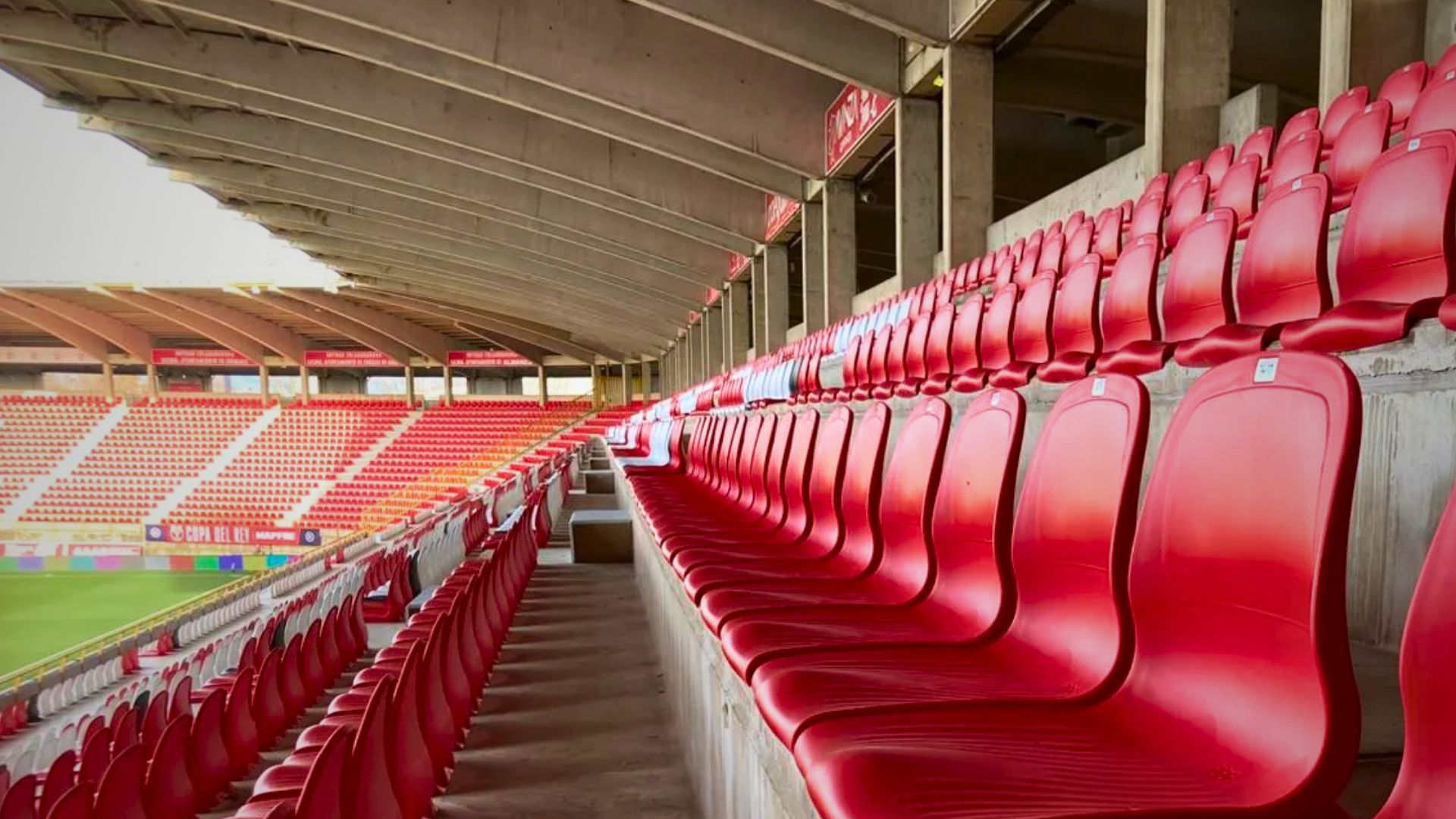
However, the real problem may lie in what is not visible to the naked eye.
The deterioration of seats can also affect safety, seating organization, cleanliness, maintenance costs and the experience of those who use the facility.
Therefore, renovating a stand should not be understood solely as an aesthetic performance. It is an opportunity to review the entire operation of the space and adapt the installation to your current needs.
When should you consider renewing the seats?
It is not always necessary to wait for an important part of the stand to be ready. damaged. There are several signs that indicate that the time has come to evaluate a renovation:
- Noticeable loss of color due to sun exposure.
- Cracked, deformed or ridged seats.
- Deteriorated or repeatedly repaired fixings.
- Differences in tonality between original parts and spare parts.
- Difficulty cleaning certain areas.
- Incomplete or incomplete numbering.
- Capacity distribution difficult to manage.
- Image of the stands away from the club’s current identity.
- Older models that no longer have compatible spare parts.
Carrying out an inspection before problems become widespread allows for better planning of the intervention, reducing unforeseen events and avoiding continuous repairs that only prolong an already exhausted solution.
Five improvements that a well-planned renovation can bring
1. Greater security and better organization of capacity
A correctly configured stand helps to identify each location, keep the lines orderly and facilitate the movement of spectators.
The renovation also allows you to check the condition of the anchors, study the available distances and select an appropriate solution for the actual geometry of the stand.
It is not simply a matter of calculating how many seats fit. It is necessary to assess how they are accessed, how they are numbered, what space is available and which model best responds to the intended use.
2. A more comfortable experience for the viewer
The audience experience begins long before the start of the game and continues throughout the entire time they remain in the facility.
The shape of the seat, lumbar support, backrest height, space between rows and ease of access influence the overall perception of the venue.
Each area may require a different solution. A municipal field, a covered pavilion, a main stand or a hospitality area do not have the same needs. Choosing correctly avoids oversizing the project or installing a product that does not respond to real use.
3. Less maintenance over the lifespan
The purchase price is only part of the cost of a stand.
Cleanliness, resistance to intensive use, sun exposure, replacement of parts and the time required by maintenance personnel to maintain the seats must also be considered. in good condition.
Proper design can facilitate water evacuation, reduce areas where dirt accumulates and simplify the replacement of a unit when necessary.
The goal should not only be to install new seats, but to reduce incidents and costs for years to come.
4. An image consistent with the identity of the club or the municipality
The seats occupy a very important part of the visual surface of any sports venue.
A well-studied combination of colors can integrate the shield, the name of the club, the year of foundation or a recognizable pattern. In addition, it helps to improve the image of the stadium both during events and when the stands are empty.
This customization must be planned on the actual grid of the stands. The rows and locations work like pixels, so the readability of a text or a symbol will depend on the geometry, the observation distance and the number of colors used.
It is not about placing colors at random, but rather designing a composition that works from the main points of view of the venue.
5. A more sustainable installation
Sustainability does not end with the choice of a recyclable material.
It also involves installing resistant solutions, prolonging their useful life, reducing the need for replacements and studying whether part of the existing seats can be reused in other areas.
In certain projects, a renovation can be carried out in phases or take advantage of units in good condition to expand other sectors of the facility. This planning reduces waste and allows you to optimize the available budget.
Not all seats are suitable for all stands
One of the most common mistakes is choosing the model solely for its appearance or price unitary.
Before deciding, it is advisable to analyze:
- Whether the installation is indoor or outdoor.
- Exposure to solar radiation and meteorological conditions.
- The intensity and frequency of use.
- The geometry and material of the stand.
- The space available between rows.
- The necessary fixing system.
- The requirements for comfort and support.
- The numbering and organization of localities.
- The regulations applicable to the project.
- Future maintenance and replacement needs.
In some spaces a compact seat with lumbar support may be sufficient. In others it will be necessary to incorporate high backrests, folding systems or specific solutions for stands and areas of greater comfort.
The best choice is not always the most complex seat, but rather the one that correctly meets the needs of the venue throughout its useful life.
The importance of working with tested products
In installations subject to intensive public use, the resistance of the product must be supported by technical documentation.
The FanBase SPARK series has been tested and certified by the Biomechanics Institute of Valencia in accordance with the standards UNE-EN 12727:2017 and UNE-EN 13200-4:2008.
In addition, their models are made of high-density copolymer polypropylene, recyclable and additived with anti-UV stabilizer, characteristics especially relevant for outdoor sports facilities.
Having this documentation facilitates the technical prescription, provides guarantees to the person responsible for the installation and allows justifying the choice of the product within the project.
How to properly approach renewal
An effective renewal should be developed through an orderly process:
- Inspection of the existing stand.
Review of seats, fixings, geometry, accesses and deteriorated areas. - Definition of needs.
Type of use, category of venue, required comfort, budget and desired image. - Selection of the model and installation system.
Choice of the seat based on the actual conditions of the project. - Color and layout design.
Sector planning, numbering, mosaics and visual identity. - Organization of the intervention.
Coordination of supply and installation to reduce the impact on sporting activity. - Final verification.
Checking of fixings, finishes, numbering and correspondence with the planned design.
This methodology allows you to anticipate problems before they reach the construction site and offers greater control over the budget, deadlines and the final result.
A renovated stand also improves the management of the venue
Changing seats may seem like a one-time intervention, but its effects last for years.
A well-designed solution can improve security, simplify maintenance, organize capacity and reinforce the identity of the club or municipal facility.
At FanBase we design, manufacture and install solutions for stadiums, football fields, pavilions and sports venues. We study each stand to propose the most suitable model, fixing and distribution for its actual conditions of use.
Are you studying the renovation of a sports facility?
Tell us the characteristics of the project and we will help you evaluate the different technical possibilities.