
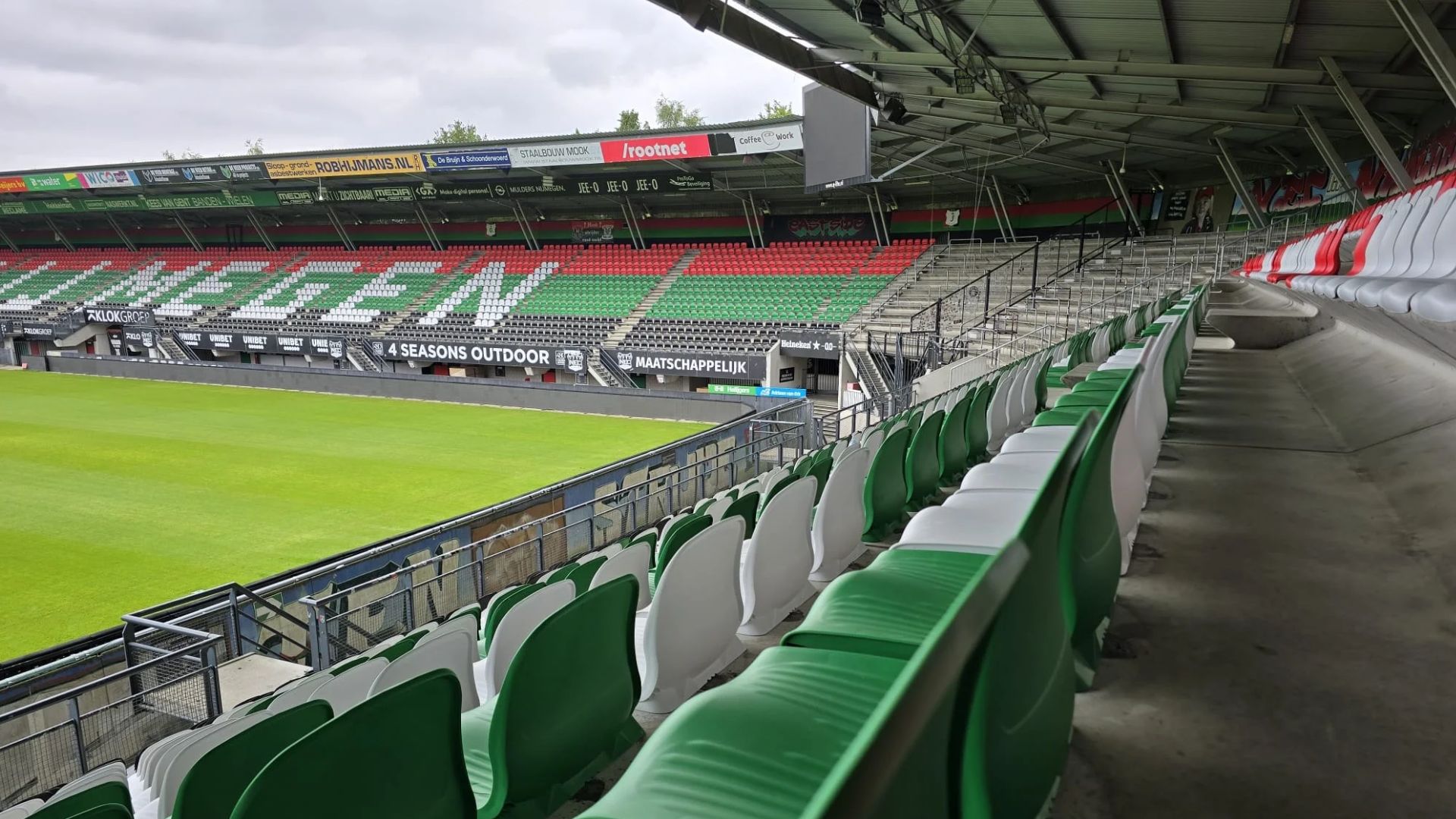
If you install stands or integrate equipment into venues, you’ve seen it: the budget fits… until assembly begins.
And there appears the silent enemy of the margin: repeated friction. An adjustment here, a rethinking there, an anchor that “should” fit but on site never fits the same. You don’t get sunk by a big mistake: a hundred micro-decisions wear you down. And when that happens seat after seat, time multiplies and planning becomes a constant negotiation.
The margin is not lost in the price: it is lost in the assembly
In a real project there are too many variables to add up another one: footprint, riser, tolerances, supports, unforeseen events, last minute changes… The only thing you need is that the seat is not a variable.
Therefore, the key question is not “which is the cheapest?”, but this:
Is this seat installed logically… or will it force me to invent?
The 3 frictions that consume the most hours (and no one budgets well)
1) Tolerances and stakeouts
The ideal tier does not exist. If the system requires surgical precision, each deviation robs you of minutes that turn into hours.
2) Confusing or poorly repeatable fixation
When the fixation is not clear, the assembly stops being execution and becomes “resolve.” And resolving, in construction, is where the margin dies. In installations, an approach of defined and consistent anchors usually works better (for example, configurations of 2 to 4 points depending on the environment and requirements).
3) Supports poorly aligned with the reality of the stands
No It is the same to anchor to a tread or to a riser, nor to work on concrete, metal or wood. If the manufacturer does not consider this range well, you make the adjustment… and you pay for it.
What does a “construction-friendly” seat mean
A seat designed for installation is not “the most beautiful”. It is the one that reduces decisions in the field and allows the process to be repeated without surprises.
In practice, it is noticeable in very specific things:
- Fixing and support options adapted to the type of stand (tread/riser, 2–4 points).
- Outdoor technical material (for example, UV stabilized copolymer polypropylene) when use is intensive and outdoors.
- Drainage, perimeter and geometries that facilitate cleaning and reduce degradation (fewer incidents, fewer “reworks”).
- Regulations and clear tests (UNE-EN 12727 for severe public use and UNE 13200-4 for spectators, in addition to reaction to fire according to local requirements).
When that is well resolved, the assembly returns to what it should: a repeatable process.
The real shortcut: closing the configuration before stepping on site
If you want to protect margin, your “installation kit” must be defined before entering:
- What support goes in each zone.
- What type of anchoring applies.
- How the installation and logistics are sectored.
- What technical documentation accompanies (to avoid improvisation).
Because when the seat is designed to be assembled logically, the team advances, the project breathes… and the margin stops dying in screws.
FanBase stand seats (product line)
If you are in that selection phase and you want the seat not to be a problem on site, here is the line of seats for stands by FanBase